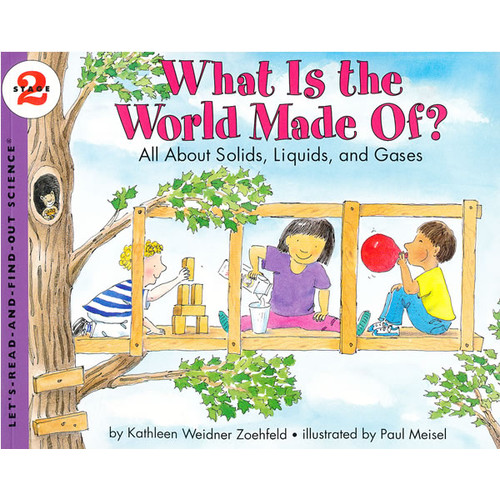
Did you ever walk through a wall? Drink a glass of blocks?Have you ever played with a lemonade doll, or put on milk forsocks? This latest addition to the Let's-Read-and-Find-Out Scienceseries introduces the youngest readers to an important scienceconcept: the differences between solids, liquids, and gases. Anychild who wants to know why he can't walk through a wall will enjoyKathleen Zoehfeld's simple text and Paul Meisel's playfulillustrations.
Grade 1-3-A fact-filled, accessible study of solids, liquids,and gases. The book gives examples of each state of matter and somesimple activities that demonstrate the attributes of each. The lastpage presents three related science experiments. The author's useof sentence fragments, such as "Water flowing in the creek," isbothersome, but the humorous illustrations add to the text andprovide a good mix of children of both genders and various racesenjoying science. The page layout makes this title suitable for usewith groups; the easy-to-read text makes it a good choice forindependent reading and research. Teachers will delight in theclear definitions and examples used to introduce concepts that areoften offered on a much higher level.
Once again the Let's-Read-and-Find-Out-about Science series takeson a really difficult concept and dramatizes it with hands-onexamples from everyday life. This time, the concept is the threestates of matter: solid, liquid, and gas. The explanations areclear with a simple, informal text for the new reader, and thelively line-and-watercolor pictures bring in humor and commonsense("Did you ever drink a glass of blocks?"). Water is the centralexample of how some things change from solid to liquid to gas, butwords and pictures show that most things in the child's world stayin one state or another ("And it's a good thing they do! Can youimagine a world where... ?") A final page includes simpleactivities to do to find out more.